Keynote Speeches
You’re Not Here to be Popular
Leadership and decision-making for wicked problems - with Tom Foley
Large organisations don’t fail because leaders can’t make decisions. They fail when decisions don’t hold up in the real world - when the problem is messy or “wicked,” the data is incomplete, stakeholders are misaligned, and the spotlight is on. That’s the environment Tom Foley knows inside out.
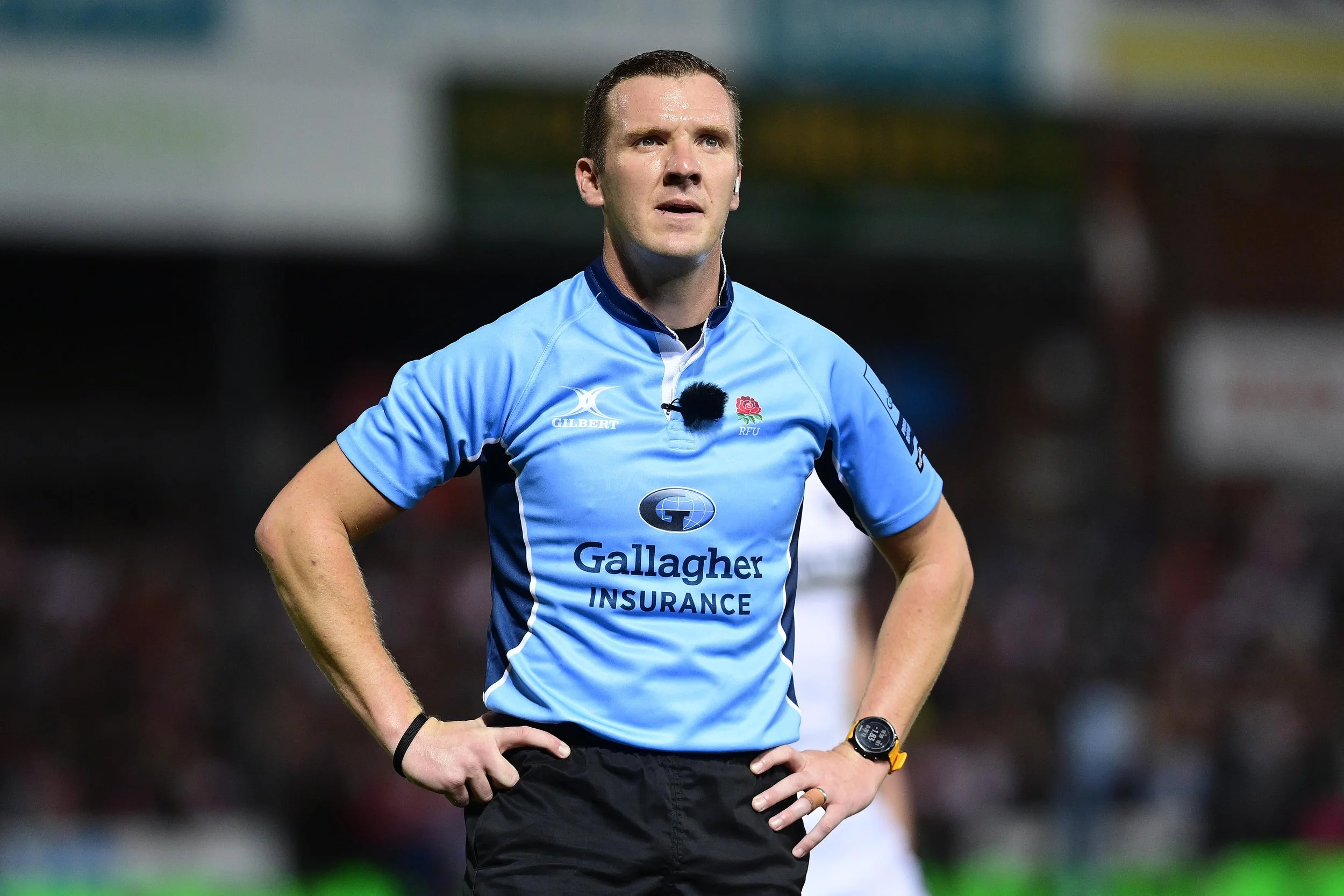
Tom spent 12 years as a professional Rugby Union match official in high-consequence, high-scrutiny arenas where every call is contested and every decision has immediate impact. He officiated 300+ top-tier matches, including five European Cup Finals and five Premiership Rugby Finals, and was appointed TMO for the 2023 Rugby World Cup Final. In that world, being “right” isn’t enough. Your credibility depends on how you decide, how you communicate the decision, and how you manage what happens next.
Those are the same pressures leaders face in organisations navigating transformation, regulation, reputational risk, and complex multi-stakeholder change. Tom now translates his lived experience into practical tools for executives and boards: decision processes that stand up in wicked problems, clarity around non-negotiables, and a proven approach to “selling the call” ethically so decisions land as legitimate - especially when they won’t be popular.
Key information
Why it matters
Wicked problems don’t have perfect answers - only defensible decisions. And when uncertainty is high, people don’t judge decisions purely on outcomes. They judge them on legitimacy: did this feel fair, consistent, explainable, and followable?
When leaders don’t provide meaning, a “meaning vacuum” forms - and the story gets written for them in corridors, chats, and headlines. The cost is familiar: drift, resistance, loss of trust, and decisions that get re-litigated for months.
Tom’s core idea is simple and sharp: leadership and decision-making aren’t separate skills. Leadership is what decision-making looks like when other people have to live with the consequences. The job isn’t to be popular. It’s to be respected - through clarity, fairness, consistency, and communication that stabilises the system.
Who this talk is for?
Executive teams and senior leaders leading strategy, transformation, or turnaround
Boards and governance leaders operating under scrutiny and reputational risk
Leaders in regulated or high-stakes environments (finance, energy, health, government, infrastructure)
Change leaders, HR, comms, and program directors who need decisions to land and stick
Any leader dealing with complexity: misaligned stakeholders, competing incentives, and high emotion
What you will learn?
A practical, repeatable approach to making and communicating decisions when the problem is contested and consequences are real:
How to frame wicked problems so teams stop chasing certainty and start creating clarity
How to define non-negotiables, thresholds, and principles people recognise as fair
How to avoid “drift” by recognising that non-decisions are still decisions (and often the most damaging)
How to prevent the “false yes” and surface dissent early using sharper questions (e.g., “Are you against this?”)
How to communicate decisions with the right level of transparency - clear enough to build trust, not so much that it creates noise
What will you take away?
This keynote equips leaders with a decision-making operating system they can use immediately:
A repeatable decision process for messy, high-stakes situations
A model for building legitimacy under disagreement (fairness cues + consistency + explanation)
Practical methods for “selling the call” ethically so decisions are understood - even when unpopular
Stories and insight from the pitch that map directly to the boardroom: pressure, conflict, trust, and accountability
The result: faster alignment, stronger trust, and decisions that stick - without chasing popularity.